There is a course you can buy right now that teaches independent insurance agents how to manage policy renewals in Microsoft Excel.
It covers how to set up a renewal quotation sheet, how to analyze expiration data, and how to build formulas that remind you when a client's policy is coming up.
Agents are paying for it. Real agents, running real books of business, spending money to get better at a spreadsheet because nothing else fits their situation.
That says everything about the gap in this market.
The Way Most Independent Agents Track Renewals Today
Ask an independent agent how they manage renewals and you will hear variations of the same answer:
- A spreadsheet with expiration dates color coded by urgency
- Calendar reminders set manually for each policy
- A notes app, a whiteboard, a stack of paper flags on a desk
- Their AMS, if they have one, with renewals buried three menus deep
- Memory and habit for the clients they know well enough
This works when your book is small. When you are managing 50 clients you can hold most of it in your head. You know whose auto policy renews in March. You remember to call the Hendersons every October.
Then the book grows. You hit 150 clients, then 300. A producer joins. A CSR comes on board. Now three people are working from three different systems and nobody has a complete picture.
That is when clients start slipping away. Not because the process was wrong. Because it was never built to scale.
What the Industry Told Agents to Do
For years the answer from the industry was one of two things: buy a CRM or buy an AMS.
The CRM answer misses the point entirely. CRMs are built for pipeline management: tracking leads, logging calls, moving prospects through stages. They were not designed around policy expiration dates, risk scoring by line of business, or renewal status workflows. An agent who buys a CRM to fix their renewal problem ends up with a more expensive version of the same gap.
The AMS answer is the right tool for the wrong agency. Systems like HawkSoft and Applied Epic are genuinely powerful, but they start at $250 or more per month, carry per-user fees that add up fast, and are built for agencies with 10 or more staff who need carrier integrations, accounting workflows, ACORD forms, and policy downloads. A solo agent or a two-person shop does not need all of that. They need to know which renewals are coming up, which clients are at risk, and what their team has done about it.
Nobody built the thing in the middle. A focused, affordable tool built specifically around the renewal cycle for small independent agencies.
What a Purpose-Built Renewal Tool Actually Looks Like
RenewalCompass was built to solve exactly this problem. Here is what that looks like in practice.
Your Entire Book at a Glance
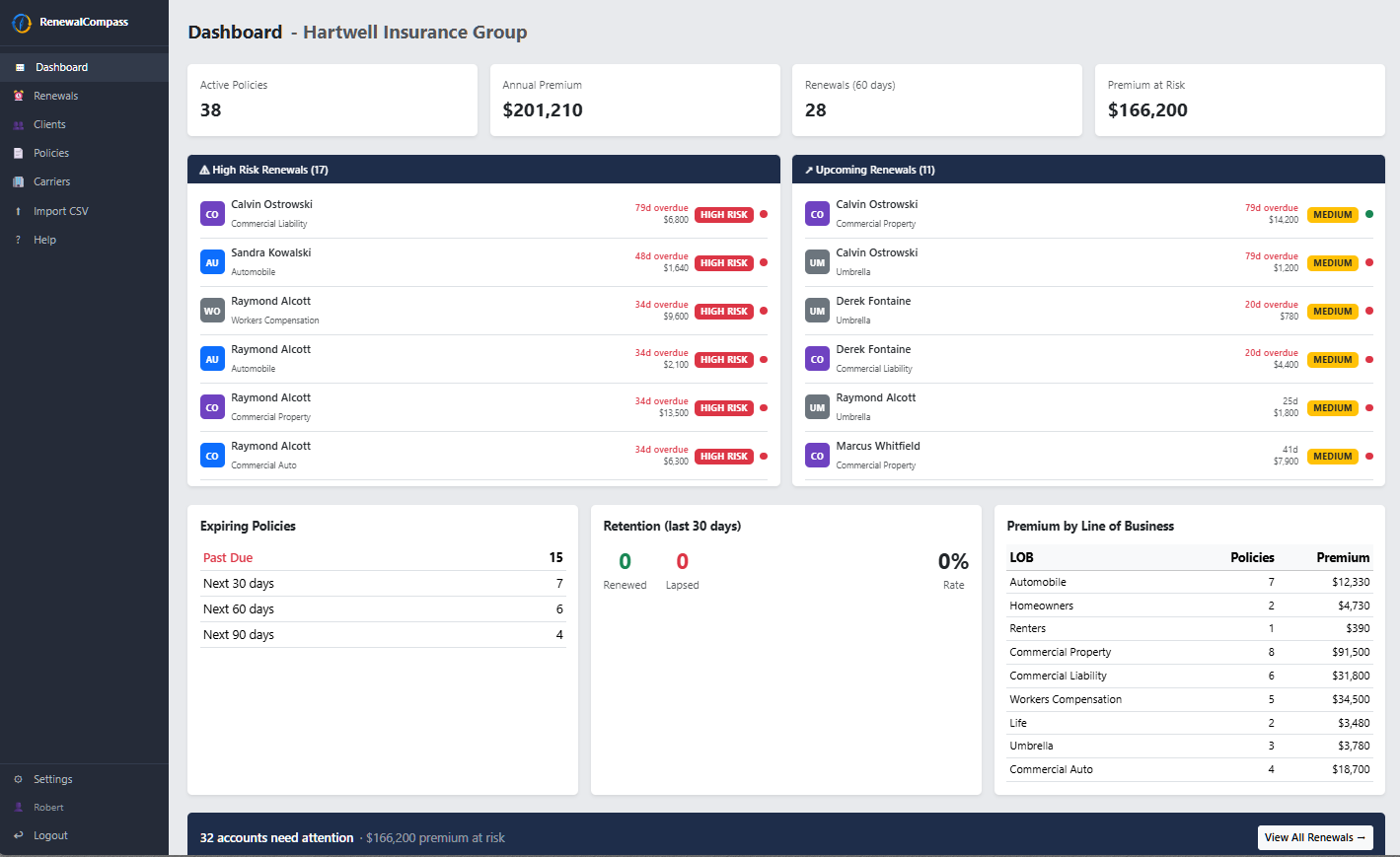
The moment you log in you see the health of your book: total policies, renewals coming up in the next 60 days, premium at risk, and which accounts are flagged as high risk.
No digging through reports. No running queries. One screen tells you where to focus today.
Automated Risk Scoring
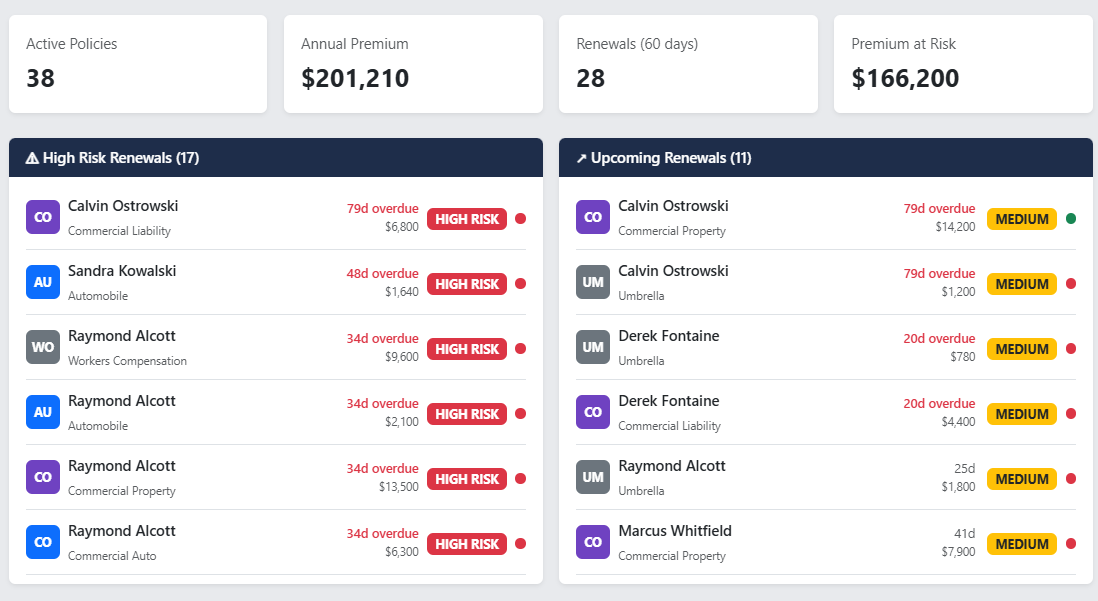
Every policy in your book is scored automatically based on premium size, days remaining until expiration, line of business, and how long since anyone on your team logged a contact with that client.
High-risk accounts surface to the top. Your team knows exactly where to focus before the day starts.
A Pipeline View Built for Renewals
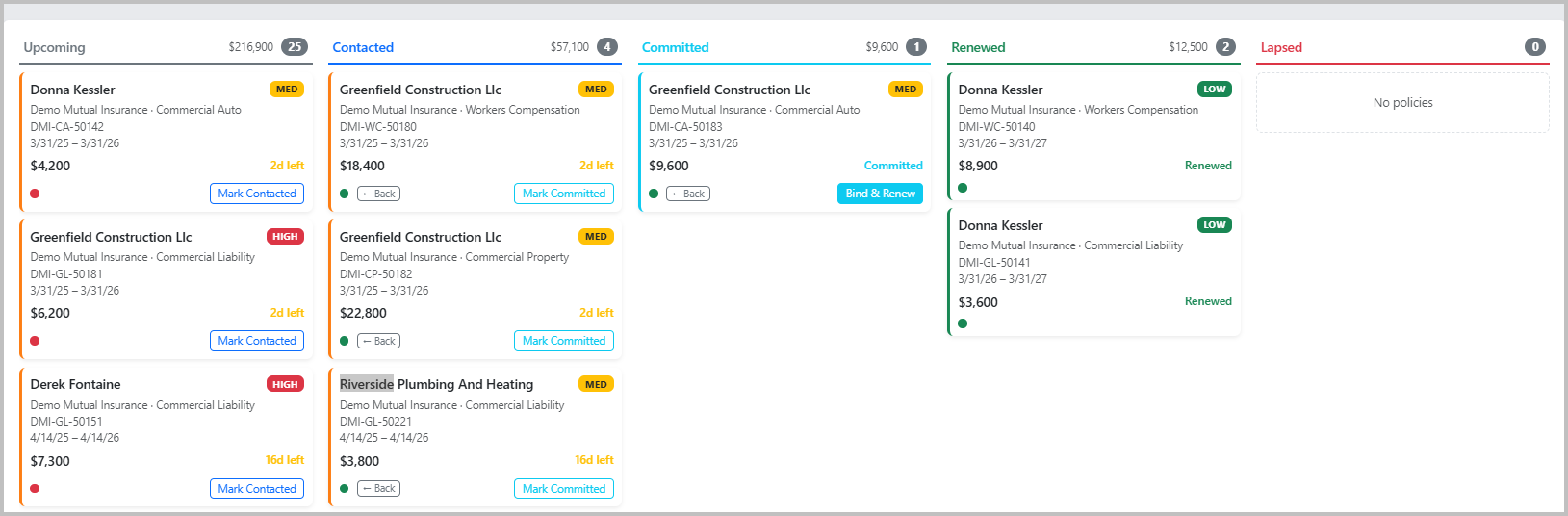
A spreadsheet treats renewals as a list. RenewalCompass treats them as a pipeline. Upcoming, Contacted, Renewed, and Lapsed. Your team always knows exactly where each account stands in the renewal process.
CSV Import and Setup in Under an Hour
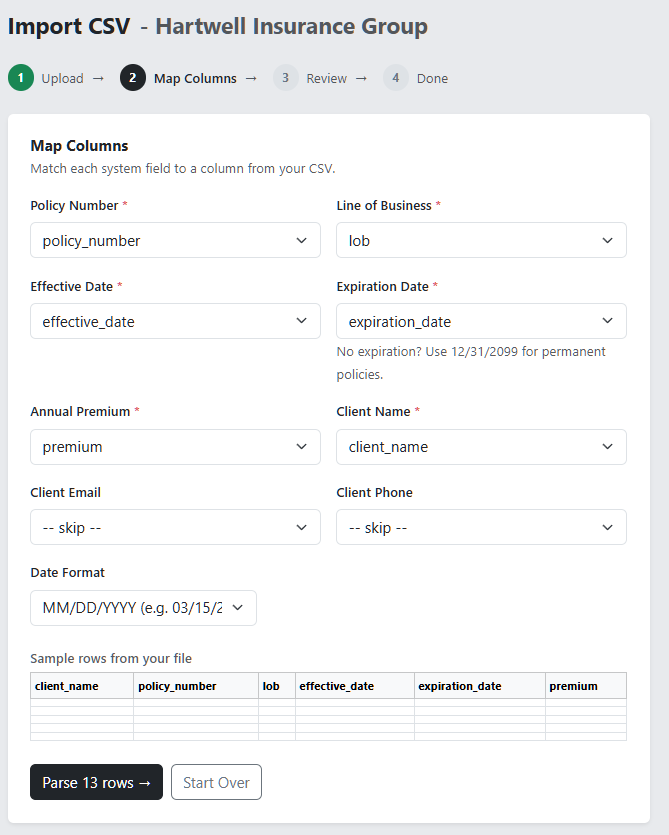
You do not need to rebuild your book from scratch. Export a CSV from your existing management system or spreadsheet, upload it to RenewalCompass, map your columns, and commit. Your entire book is in the system and scored before you finish your first cup of coffee.
Renewal Action Tracking
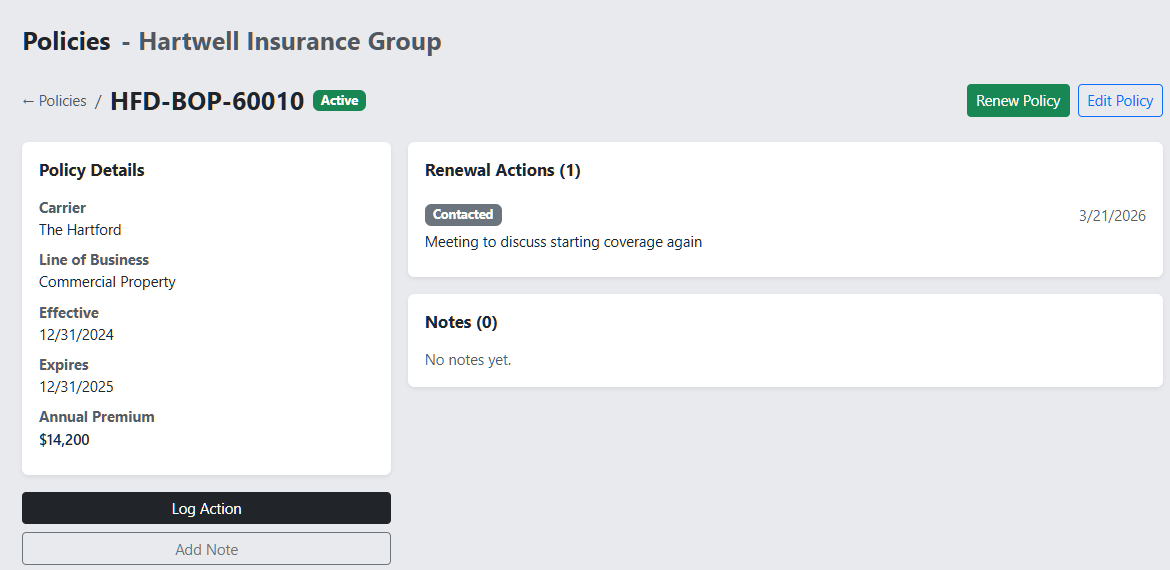
Every call, email, and meeting gets logged against the renewal record. Your whole team sees the history. No more asking whether anyone talked to the Hendersons. The answer is right there in the account.
Back to That Excel Course
The fact that a course exists to teach agents how to manage renewals in a spreadsheet says less about the agents taking it and more about the tools available to them.
The agents buying that course know exactly what they need. They just have not had a purpose-built option at the right price.
RenewalCompass exists to change that.
Frequently Asked Questions
Why do insurance agents still use Excel for renewals?
Many agents use Excel because it is familiar, cheap, and easy to start with. The problem is that it breaks down once the book grows and multiple people need to track renewal status, contact history, and priority.
Is Excel good enough for policy renewal tracking?
Excel is good enough for a small book and a disciplined operator. It becomes risky when renewals depend on manual updates, memory, and scattered notes instead of a shared workflow.
What should replace Excel for renewal tracking?
The right replacement is a tool that keeps expiration data current, shows the whole renewal pipeline, ranks risk automatically, and logs every producer touchpoint in one place.
Also worth reading:
- Nationwide Just Made the Case for a Better Renewal Process
- How Renewal Season Gets Away From You
- What Is a Renewal Pipeline and Why Every Independent Agency Needs One
- How Independent Agents Can Manage 500+ Policy Renewals Without a Full AMS
- AMS Alternatives for Independent Agents Who Just Need Renewal Tracking
RenewalCompass is the focused, affordable option most independent agents have been looking for. Import your book in an afternoon, score risk automatically, and run your renewals from a pipeline instead of a spreadsheet.
Get early access and get notified the day subscriptions open. Launching Q3 2026.